DM/NS-108 Piesberg #80

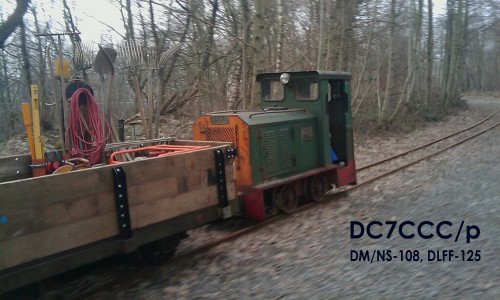
the light railway at the Piesberg


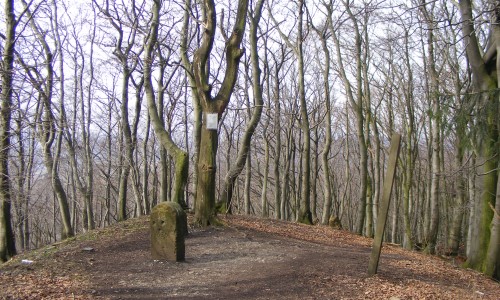
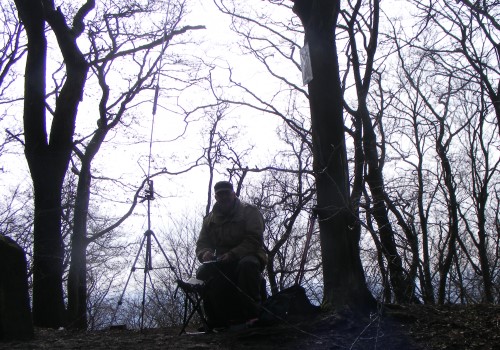
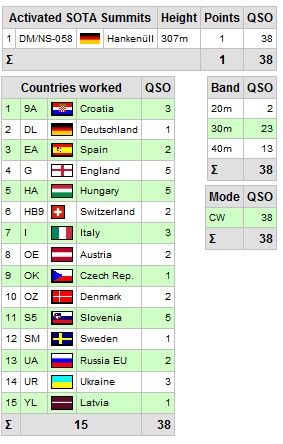
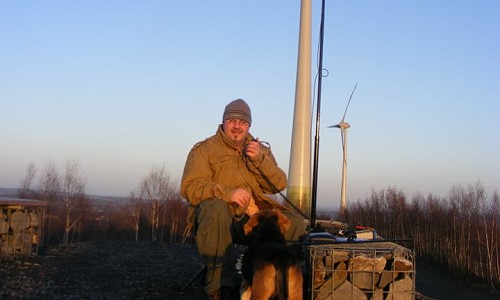
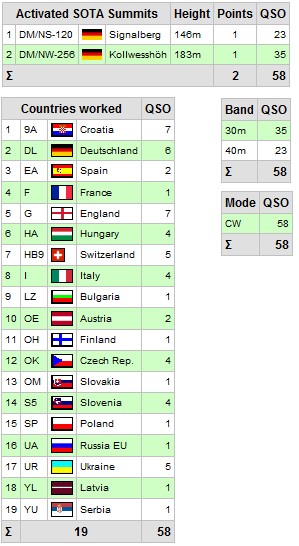
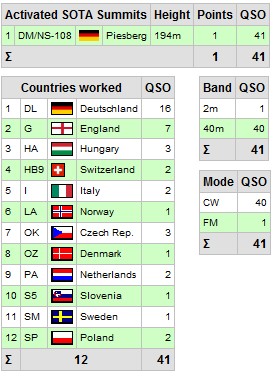
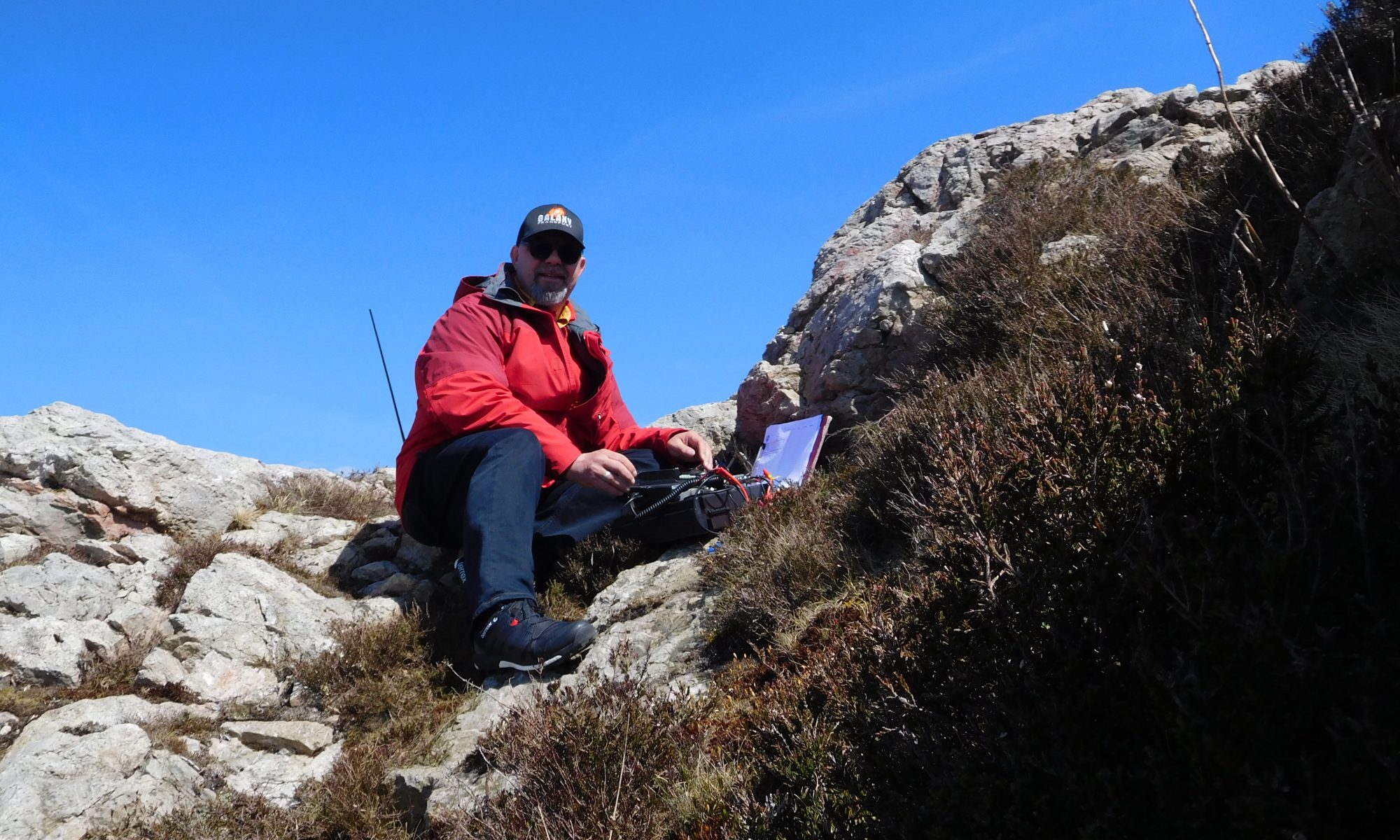
G I walked today the 2km long southway to the Piesberg top. On the way I met first time the Piesberg Railway. At about 1°c I surprisingly made 41 QSO in 30 minutes. Planned were only four or five QSO with 5w and MP-1 antenna. So it was very nice morning. Thanks to all takers and thanks for spotting  on SOTAwatch and DX-Cluster to F5JKK, SM5MEK and HA7UG

Heute habe ich den Piesberg über den Südstieg vom Industriemuseum bestiegen. Bis nach ganz oben sind es, je nach Weg (es gibt derzeit drei Varianten), ca. 2km bei etwa 85m Höhenunterschied. Erstmals begnete ich der reaktivierten Piesberg Feldbahn. Die Bahnfeunde haben am „Südstieg-Bahnhof“ am Gleisbett gearbeitet.

Zuerst bin ich den Waldweg von der Endstation Südstieg nach oben gegangen, dann die etwa 140 Stufen der zweiten Treppe. Der Aufbau der Station war nicht rekordverdächtig und dauerte 8 Minuten … aber schon nach dem ersten CQ meldete sich HA7UG aus Ungarn.

Obwohl ich mit nur 5w und meiner MP-1 mit einer MFJ-1954 (3m lange Teleskopverlängerung anstatt dem Original der MP-1) qrv war, waren schnell 5 QSO im Log. Eigentlich wollte ich qrt machen, aber es meldete sich eine Station nach der anderen und nach einer halben Stunde waren 41 QSO im Log. Nochmal QRZ? zum Schluss … keiner meldet sich mehr. Dann wieder abbauen und weg. Es war schon ungemütlich bei ca. 1°C und einer steifen Brise.

Danke für die SOTAwatch und DX-Cluster-Spots an F5JKK, SM5MEK and HA7UG.

Das war GMA Aktivität #80 und SOTA Aktivität #71 vom Piesberg von mir.

Result 19-Feb-2011
Result 19-Feb-2011


DARC UKW-Winter-Fieldday 2011

Heute Morgen habe ich mich in der 70cm-Klasse versucht.

Diesen UKW-Kontest kann man in die Klasse „muss man nicht mitgemacht haben“ einorden. Das Band war tot. Nicht einmal irgendwo war eine leise Station zu hören. Habe etwa 15 Minuten  CQ gerufen: nichts. Dann hörte ich Wolfgang, DK1HW/p, wie in SOTAwatch angekündigt, auf dem Köterberg. Auch auf dem Köterberg war noch DB1AI/p.

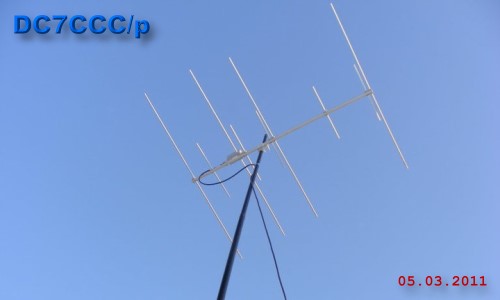
Bedingungen: FT-817ND, 6 ele DK7ZB Yagi, leichter Nieselregen bei 8°C. QTH: DM/NS-108, JO42AH


More Adventure, less Radio – WNA on DM/NS-108

Freezing Rain on the GFK Mast

GWNA is the North-Westphalia  Activation evening. This 2 hour 2m/70cm FM CW SSB contest is held on every first tuesday in a month. I started this evening at 1845 UTC and called CQ on 70cm SSB.

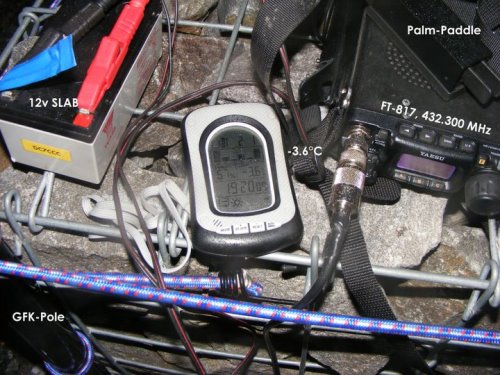
Setup
Setup

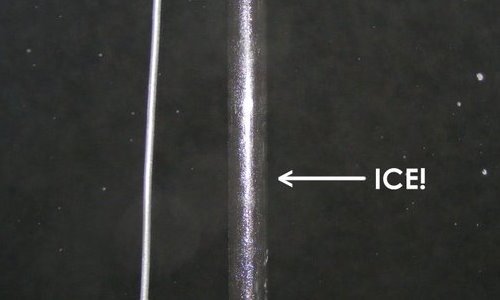
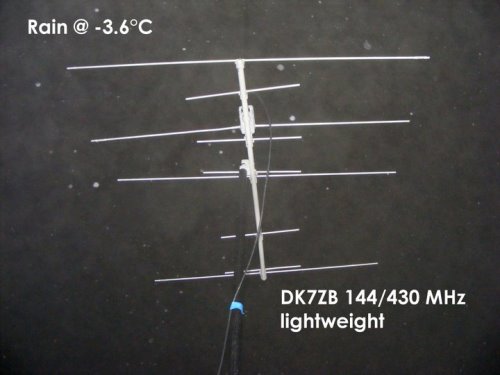
But no answer. Then suddenly rains started at -3.6°C (26°F). Quick I made some QSO on 2m and after another 15 minutes I made qrt. The ice on the mast was very thick, I could not push it together. I discovered a new usefull tool for the outdoor HAM. The hot tea was this evening not for the Operator but for the GFK-pole.

Bei Minustemperaturen ging es heute Abend auf den Piesberg (DM/NS-108).  Aber es war nicht zu kalt. Die Felsrippe war schnell erreicht und die Station aufgebaut. Im 70cm SSB Bereich war keine einzige Station zu hören. So rief ich CQ. Ungefähr eine Viertelstunde blieb ich ungehört. Leider. Plötzlich setzte Regen ein, aber ich wollte noch wenigstens 4 QSO auf 2m machen. In der folgenden Viertelstunde sind neun QSO daraus geworden, dann merkte ich, wie der GFK-Antennenmast vereiste und ich machte mir Sorgen, ob ich den überhaupt wieder zusammenschieben kann. ALso schnell QRT gemacht, die Antenne abmontiert – und dann bewahrheiteten sich meine

DK7ZB Antenna in the freezing rain

Befürchtungen. Durch das Eis ließ sich der Mast nicht vollständig zusammenschieben. Aber zum Glück hatte ich eine Thermoskanne mit heißem Tee dabei! Damit habe ich die Verbindungsstellen der einzelnen Mastelemente übergossen und dann konnte ich den Mast zusammenschieben.

Der Abstieg gestaltete sich als äußerst schwierig; denn auch der geschotterte Wanderweg war spiegelglatt. Ganz abgesehen von den Treppen und dem kleinen Stück asphaltierter Straße auf der Felsrippe.  Nach knapp einer Stunde war ich am Auto, das dann auch erstmal vom Eispanzer befreit werden wollte.

Bis zum März, wenn es wieder heißt: CQ WNA!

Bericht bei OS1-TV über den Abend

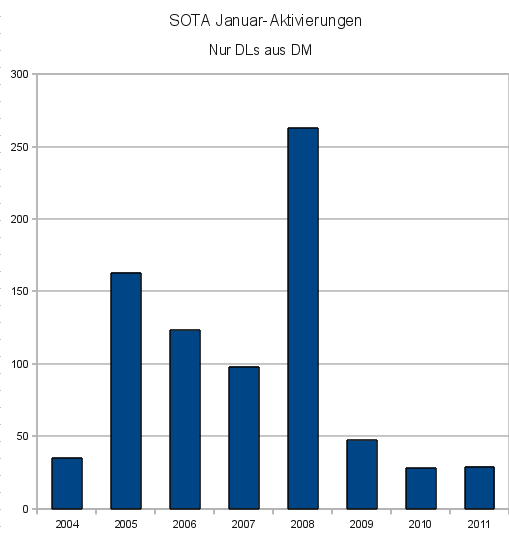
SOTA Januar-Vergleich (DM)

G Animated by the Summit Statistics Lies, Damn Lies and Statistics I wanted to see the result for DM. Quick I wrote a script for downloading the data from the SOTA Database. Here is the result:

January Comparison of DM-Association

In den Januar-News von SummitsBase wurde ein UK-Januar-Vergleich an Aktivierungen veröffentlicht. Mich hat solch ein Ergebnis für DL interessiert und ich habe ein kleines Programm geschrieben, das mir die benötigten Daten herunterlädt. Die Zahlen waren schnell mittels SQL und OpenOffice aufbereitet.

Quelle/Source: www.sotadata.org.uk

Nordic Activity Contest (NAC) und Westfalen-Nord Aktivitätsabend (WNA)

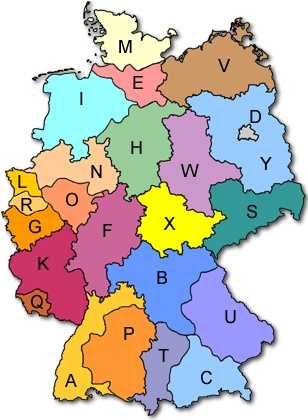
DARC Distrikte
DARC Distrikte

Der NAC ist der „Nordic Activity Contest“, der WNA ist der „Westfalen Nord Aktivitätsabend“. Auch im Baltikum finden zur gleichen Zeit Aktivitätsabende statt, sodass das Stationsangebot recht gut ist. Zeitpunkt ist immer der erste Dienstag im Monat (NAC nur 144 MHz, 432 MHz am 2. Dienstag im Monat).

Beide Wettbewerbe starten 19.00 Uhr Küchenzeit. Beim WNA geht es um „N-DOKs“ von Bielefeld bis Münster und noch südlich davon. Austausch ist hier Rapport + DOK (z.B. bei mir: 55 D23). Der WNA findet auf 2m und 70cm statt. CW SSB FM.

Etliche OZs haben ein sehr starkes Signal hier im Nordwesten (DM/NS). Aber auch Stationen aus SM sind nicht selten, sowie ON und F, für den NAC. Austausch Rapport + lfd Nummer (z.B. bei mir: 57 JO42AH)

Links:

WNA – Westfalen Nord Aktivitätsabend

NAC – Nordic Activity Contest


Netzwerkprobleme

Es bestehen zur Zeit Netzwerkprobleme, die außerhalb meines Einflussbereiches liegen. Deshalb funktionieren im Augenblick die meisten SOTA-Tools nicht. Da hilft nur eins: Abwarten …


Update: Geht alles wieder (16.00 UTC)

( There were DNS problems somewhere around the DynDNS provider. They received the IP right from the DBase Server but could not solve back the domain name into the IP, whatever ist was … now it works again)


Rockmite Activation from Piesberg DM/NS-108

for a good performance I used a dipole instead the MP-1 with the RockMite Transceiver
for a good performance I used a dipole instead the MP-1 with the Rockmite Transceiver

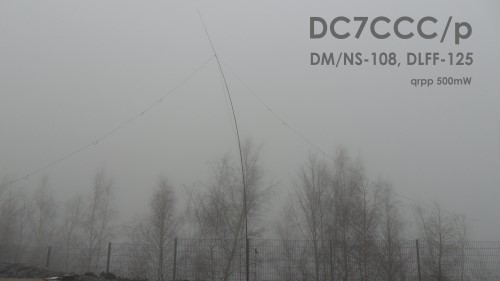
On 29th December 2010 reached me the Rockmite 40 kit. I build it up and on 22nd January I made my first SOTA Operation with the Rockmite in the classic peppermint case. The transceiver has 500mW output and I worked 6 stations from LA, DL, G & F with fog, drizzle and temperature about 0°C.

Am 29. Dezember 2010 traf nach ca. einem Monat der Rockmite Bausatz aus den USA ein. Beim Zoll musste ich noch 6,91€ Umsatzsteuer

The Rockmite 40 Kit
The Rockmite 40 Kit

bezahlen und dann habe ich meinen Bausatz und einen ganzen Stapel Papiere mit vielen Stempeln und Unterschriften erhalten.

Der Aufbau war zwar ein bisschen fummelig, aber die Platine war tatsächlich an einem Abend bestückt. Jedoch fehlte ein Kondensator im Bausatz und ich musste bis zum neuen Jahr 2011

after one evening work

warten, um mir einen Kondensator aus dem Electronic Shop zu besorgen.

Nachdem dann der Kondensator eingesetzt war, konnte am 4. Januar der „Smoke Test“ stattfinden. Zu meiner Überraschung funktionierte der Empfänger sofort und ich hörte eine Italienische Station CQ rufen. Aber auch der Sender funktionierte.

Smoketest: all okay!

Den Transceiver wollte ich nun in eine klassisches Altoids-Pfefferminzdose einbauen. Die hatte ich schon seit 2 Jahren in einer Schublade liegen. Auch dieser Arbeitsgang dauerte etwa einen Abend, dann war das selbstgebaute Funkgerät fertig.

Klar, jetzt wird jeder erstmal fragen, was will man mit 500mW auf 40m ausrichten?

Build into a Peppermint-Case

Die Antwort gab es heute. Bei Schmuddelwetter und Temperaturen um den Gefrierpunkt bin ich auf den Piesberg gestiegen. Anstatt der MP-1 Antenne habe ich heute lieber einen Dipol ghenommen, der sicher eine bessere Performance hat. Nach kurzem CQ und einem Spot auf SOTAwatch.org meldete sich auch schon Alain, F6ENO. Schnell darauf meldeten sich auch noch DL3JPN, G3VXJ, F6CEL, G4ELZ und LA1ENA.

The finished Rockmite Transceiver

Der Run dauerte nur 5 Minuten. Der Nieselregen kroch aber langsam unter die Jacke und bevor die Elektronik Schaden erleiden würde, habe ich beschlossen QRT zu machen.

Einen ausgiebigen Rockmite Test werde ich dann nochmal bei schönem Wetter durchführen.

Where do I go next?

Android App helps to find the next Summit Reference up to 100km

App Inventor for Android Blocks Editor

Well, I played today a little bit around with the App Inventor for Android. My idea: the Android device receives the GPS position and passes the coordinates to a web application connected to my summit database. This application lists all summits up to 100km. Programming with the App Inventor is like a mixture of visual programming and puzzeling. Very funny.

Here you have an example of the display, you will get on your Android mobile if you are in Hannover, Germany

The very rudimental App (but it works!) can you download here:  www.AdventureRadio.de/apk/NextSota.apk

Or use the QR-Code:

Download Next Sota App
Download Next Sota App V0.0.2 25-Jan-2011

DARC 10m Contest 2011 from DM/NS-036 Dörenberg

MP-1 Antenna on the "Hermannsturm"
MP-1 Antenna on the „Hermannsturm“
Hermannsturm
Hermannsturm
Operating Site on the Platform
Good Old Times: same location in 1985 10m Contest at -15°C. Left DC7CCC, right DL5BAD as DFØJU
Good Old Times: same location in 1985 10m Contest at -15°C. Left DL4BAH (now DC7CCC), right DL5BAD as DFØJU/p

No Conditions are Good Conditions

One of my favorite contests ever is the DARC 10m Contest. In the80’s several times per year it is reduced to only one date: The January DARC 10m Contest. Mostly there are bad conditions, two years ago I worked stations from Italy or Spain during the contest. But today the band was closed. This is a big advantage for the radio-hiker on the summit: No DX condition means, that the high-power stations with beams can work also over groundwave only.

My station today: about 20w output into my MP-1 antenna. Temperatures on the tower around 0°C, no rain or snow. So I decided to operate directly from the platform.  I started 10 minutes too late, because the ascent on the „Dörenberg“ was very difficult. Crusted snow and ice-fields forced me to go very slow. A normal ascent takes 20-25 minutes, now I needed 1 hour. On the top of the summit were 30cm crusted snow, but the tower was luckily free of snow and ice.

Quick I installed the MP-1 and connected the

transceiver. Log ready, clock ready, free frequency and: CQ CONTEST DC7CCC/P CONTEST.

The first call was at 09:11 UTC and was followed by the first answer. Until 10:59 I logged 117 QSO. This year SSB only. CW is in this contest a waste of time except you are in the CW class only.

Only one group hikers visitied the tower today. After the first hour of the contest wind came up … the last 30 minutes the windchill gave me a -20°C feeling. I was glad when the contest ended and I left the tower quickly. I cancelled also the planned additional 40m SOTA operation.

Results: 117 QSO, 1 DXCC, 58 DOKs = claimed score 6903 points. I hope it won’t give too much deduction of the points. Some stations had problems with DC7CC and DL7CCC and DC7CCC 🙂

QTH: Hermanssturm, Dörenberg, JO42AE, 331m high plust 21m tower. Ref: DM/NS-036, WFF DLFF-125 (Terra Vita)

HNY from DM/NS-026 ‚Hüggel‘

DC7CCC/p on Hüggel
DC7CCC/p on Hüggel

On sunday, the 2nd January 2011, I made my first activity in the new year. My station FT-817 running 5w with MP-1 antenna. It was difficult to find a free frequency because a contest (again 🙁 …) was running. A boring QRP contest qrmed all interesting HF bands for 24 hours.

Temperatures were around 0°C. So no problem to work without gloves. In spite of the heavy qrm I made 17 SOTA QSO. Thanks all stations for calling.

After the activation I had a short fonecall from my XYL Bettina. Then I packed together my station. And then I missed my cell-fone. I called Bettina several-times on our 2m „home-frequency“, but no answer. I switched to the local 2m repeater DB0OBK and asked around, whether s.o. can make a call to my mobile fone. Klaus, DG6BBL/m, returned and quickly I found my (white-colored) fone in the snow when Klaus rings my cell-fone. Many thanks to Klaus.

Diese Seite verwendet Cookies, um die Nutzerfreundlichkeit zu verbessern. Mit der weiteren Verwendung stimmst du dem zu.

Datenschutzerklärung